Astrobiology Revealed #34: Luca Tonietti
on planetary aerobiomes in astrobiology
by Aubrey Zerkle
For this Astrobiology Revealed, we asked Luca Tonietti about his recent perspective on “Planetary Aerobiomes in Dust- and Aerosol-Dominated Extraterrestrial Environments.”
Luca is a Postdoctoral Fellow at the Department of Science and Technology, Parthenope University of Naples, Italy. He’s also an affiliated scientist at the National Institute for Astrophysics (INAF) - Capodimonte Astronomical Observatory (OACN) in Naples, and the Institute for Chemical and Physical Processes (IPCF) of the National Research Council (CNR) in Messina, Italy.
In addition, he’s an international collaborator with the Planetary Habitability Laboratory (PHL) at the University of Puerto Rico at Arecibo. Luca discusses why extraterrestrial microbes might thrive in planetary atmospheres and how scientists could detect them.
(This interview has been edited for length and clarity.)

Luca in front of the Monte Rosa Glacier during a winter sampling campaign in 2025 in Macugnaga, Italy.
On your website, you describe yourself as an “eclectic scientist” with research interests in many different fields. How did you end up converging on astrobiology?
My path into astrobiology was anything but straightforward, which is probably why I often describe myself as an “eclectic scientist.” I studied Industrial Chemistry in high school. During my Bachelor's degree in Biology, I completed a thesis in biophysics focused on the origin of life. Later, during my Master's degree, I moved into bio-inorganic chemistry, using in silico quantum approaches to investigate metalloproteins.
Then COVID happened. Like many people at the time, I was stuck. For a couple of years, I worked as a fellow in a Botany and Zoology laboratory, studying pollinators and their floral resources. Although I enjoyed the work, my fascination with space and the origin of life never disappeared. Around that time, I discovered that a new Master's program in Astrobiology had been established in Naples. Since I had already completed a Master's degree, I reached out directly to several researchers, including Donato Giovannelli and Giovanni Covone. They put me in contact with Alessandra Rotundi, who eventually offered me a PhD position in astrobiology. That opportunity opened the door to an interdisciplinary field.
Because I worked with several different principal investigators and collaborators, I became involved in a wide variety of research areas, including space biomining, drilling projects for the exploration of subsurface life through the International Continental Scientific Drilling Program (ICDP), exoplanet discovery, the co-evolution of the geosphere and biosphere, extreme environments, and cometary science. Today, as a postdoctoral researcher, I study the geobiology of cosmic dust collected in the stratosphere and contribute to scientific activities supporting ESA's Comet Interceptor mission, alongside several other exciting projects. Looking back, I don't think I ever truly converged on astrobiology. Astrobiology is what allowed all my different interests, biology, chemistry, geology, planetary science, and astronomy, to finally converge in one single amazing place.
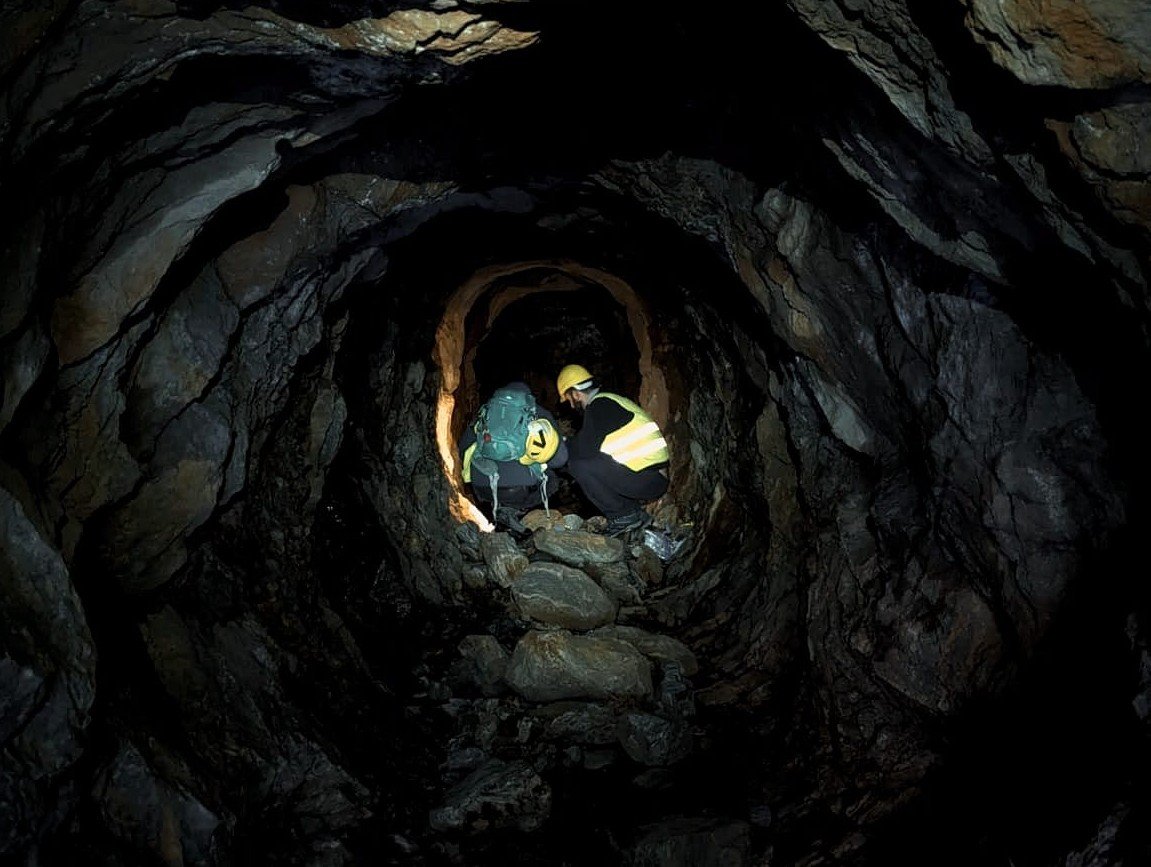
Luca with Jacopo Brusca sampling in an abandoned iron and copper mine in search of chemolithotrophic microorganisms. Migiandone abandoned mine, Italy.
In your recent perspective in Applied Microbiology, you introduced the concept of “planetary aerobiomes” as microbes that survive on particles in a planet’s atmosphere. From the point of view of an extraterrestrial microbe, what are the advantages of living on these particles versus on the planet’s surface?
From an extraterrestrial microbe’s perspective, atmospheric particles could offer an alternative survival strategy compared with remaining on the planetary surface. On many planets and moons in the Solar System, the surface is an extremely hostile place, exposed to intense radiation, desiccation, oxidizing chemistry, or extreme temperatures. Dust grains and aerosol particles can provide protective microenvironments where microbes can find some sort of shielding from these stresses. Particles can also adsorb traces of water or concentrate nutrients and chemically reactive compounds, creating localized conditions that can be more favorable than the surrounding environment.
Another major advantage is related to mobility. By attaching to atmospheric particles, microorganisms could be transported by winds and atmospheric circulation across vast distances, potentially connecting isolated regions of a planet. In this sense, particles become both shelters and vehicles, enabling dispersal on a planetary scale. Importantly, the concept of a planetary aerobiome does not imply that the atmosphere is necessarily a better habitat than the surface or subsurface. Rather, it suggests that atmospheric particles could serve as transient (extreme) environments that help microorganisms persist, disperse, and preserve biosignatures in places where habitability may be limited.
What types of habitats support aerobiomes on Earth, and what kinds of microbes live there?
On Earth, aerobiomes are associated with a wide range of airborne particle environments, including desert dust, volcanic ash, sea-spray aerosols, cloud droplets, and even the upper atmosphere. These particles act as temporary habitable niches and transport platforms for microorganisms, sometimes carrying them across continents and oceans.
The microbes found in these environments are diverse. Researchers have detected bacteria, archaea, fungi, spores, and even photosynthetic microorganisms in airborne particles. Common bacterial groups include Actinobacteria, Proteobacteria, Firmicutes, and Bacteroidetes, while fungal genera such as Aspergillus, Penicillium, Cladosporium, and Alternaria are frequently reported in atmospheric samples.
What makes these organisms interesting is their ability to tolerate extreme stresses. Airborne microbes are exposed to UV radiation, desiccation, temperature fluctuations, oxidative stress, and nutrient limitation. Many survive by entering dormant states, forming resistant spores, producing protective pigments, or relying on DNA repair mechanisms.
These terrestrial aerobiomes provide an important analogue for astrobiology. They demonstrate that microorganisms can remain viable while associated with atmospheric particles and suggest that particle-associated survival and dispersal strategies could be relevant on other worlds. Rather than imagining extraterrestrial microbes floating freely in the atmosphere, the planetary aerobiome concept is inspired by the idea that microorganisms may use dust grains or aerosol particles as mobile microhabitats, much as some microbes already do on Earth.
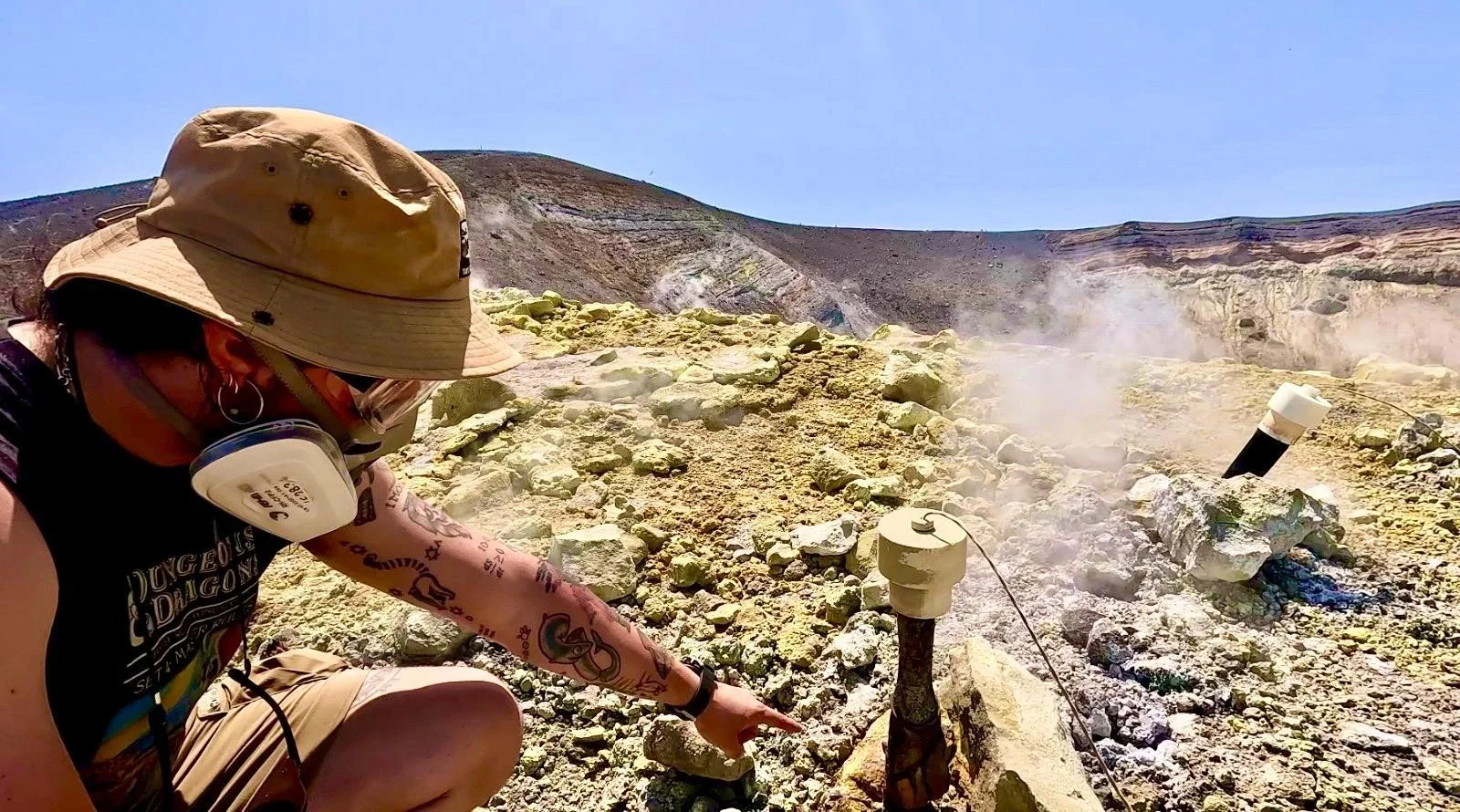
Luca sampling volcanic gases, minerals, and fluids for astrobiological research in volcanic analogue environments at La Fossa Crater, Vulcano Island, Aeolian Archipelago, Italy.
Are there other specific places in our solar system where these types of communities might thrive?
Several environments in our Solar System can be considered as candidates for planetary aerobiomes, although we have no evidence that any of them actually host life. Mars is perhaps the most obvious example. Its atmosphere is constantly interacting with vast amounts of fine mineral dust, and global dust storms can transport particles around the entire planet. If microbial life ever existed, or still exists in caves and fractures on Mars, dust particles could potentially act as vehicles for dispersal and temporary preservation of cells and/or biosignatures.
Venus is another fascinating case. Its cloud layers contain abundant sulfuric-acid aerosol droplets that remain suspended for long periods. While these clouds are extremely hostile by terrestrial standards (what about acidophilic microbes?), they have inspired discussions about whether particle-associated microbial persistence could be possible in specific atmospheric regions.
Titan, Saturn’s largest moon, presents a very different scenario. Its atmosphere is filled with complex organic aerosol particles that form a thick haze. The extremely low temperatures make Earth-like life unlikely, but Titan offers an interesting example of how atmospheric particles can dominate a planetary environment and potentially concentrate organic compounds relevant to prebiotic chemistry.
Even icy moons such as Europa and Enceladus may fit into the broader picture. There, the focus shifts from dust and aerosols to ice grains and plume particles. Material ejected from subsurface oceans could be transported through these particles, creating a link between hidden and deep aquatic environments and surface regions.
How might this concept change the way astrobiologists look for extraterrestrial life?
The planetary aerobiome concept encourages us to broaden where we look for signs of life. Traditionally, astrobiology has focused on environments such as ancient lakebeds, subsurface aquifers, hydrothermal systems, and ice-rich deposits, because these are places where liquid water may have been stable for long periods. What the aerobiome concept adds is the possibility that atmospheric particles may also serve as reservoirs and transporters of biological material. If microorganisms, dormant cells, or biosignatures can persist on dust grains, aerosol droplets, or ice particles, then evidence of life may not be confined to a single location. Instead, atmospheric circulation could redistribute that material across large regions of a planet or moon.
This has implications for life-detection strategies. Rather than sampling only rocks and soils, future missions could also collect and analyze atmospheric particles. Dust storms on Mars, sulfuric-acid aerosols in Venus’ clouds, organic haze particles on Titan, or ice grains ejected from the plumes of Enceladus and Europa could all provide access to material originating from environments that might otherwise be difficult to reach.
Can you suggest some strategies for detecting aerobiomes elsewhere in our solar system?
Potential detection strategies include using electrostatic collectors or filtration systems to capture airborne particles, followed by microscopic imaging and spectroscopy to search for cell-like structures and particle-associated microbial aggregates. Scientists could also use spectroscopy to analyze collected particles for organic molecules, pigments, lipid fragments, isotopic signatures, or mineral-organic associations that may indicate biological processes. An interesting example is the Dust in the Upper Stratosphere Tracking Experiment and Retrieval (DUSTER) system, originally developed to collect stratospheric particles in Earth’s atmosphere. A similar low-mass and relatively simple sampling approach could potentially be adapted for future planetary missions, allowing the collection of atmospheric dust or aerosol particles for astrobiological analyses.
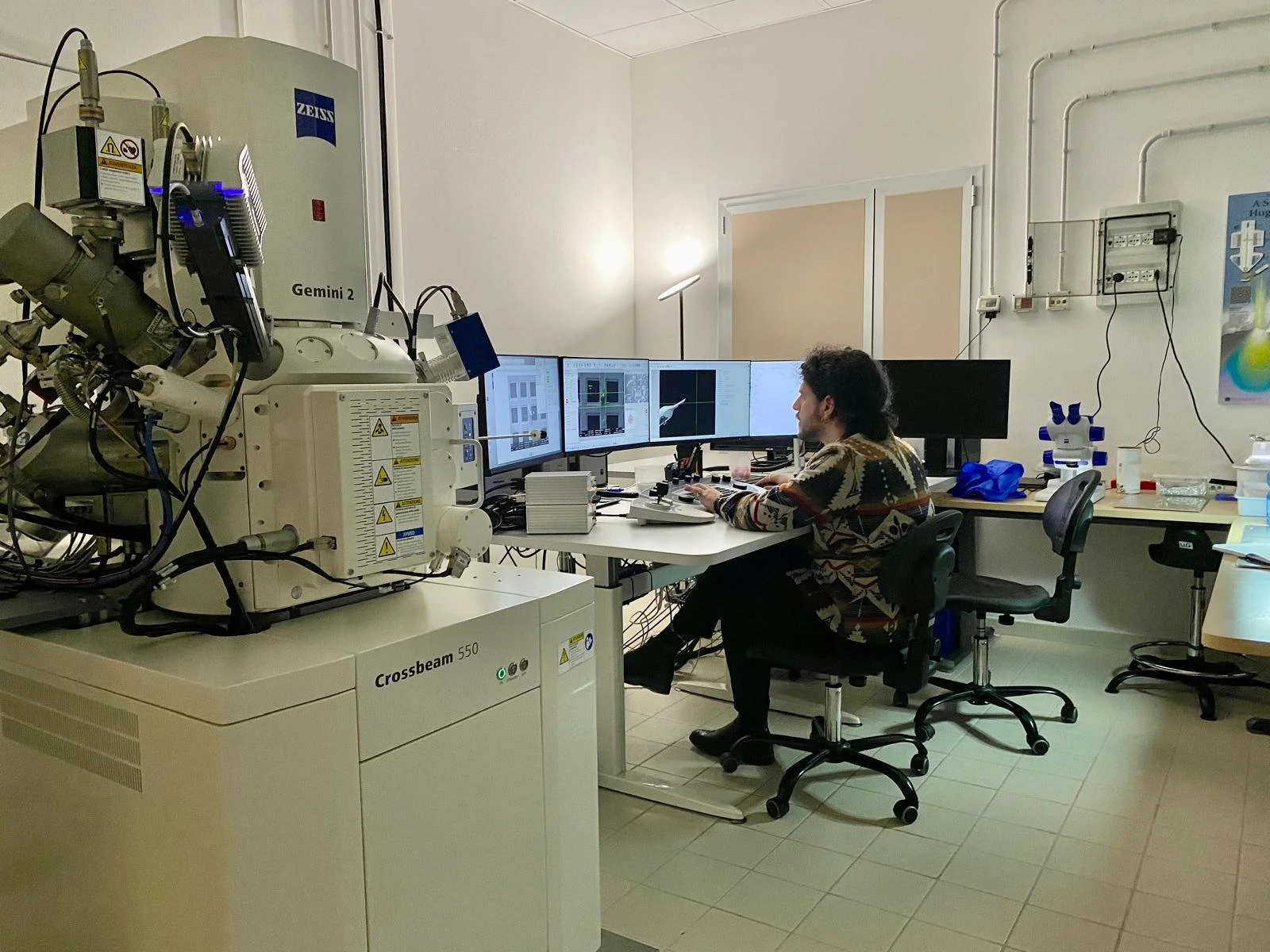
Luca using the SEM-EDX-FIB system at the University of Pisa to analyze cosmic dust particles collected by the DUSTER stratospheric balloon during campaigns conducted in Kiruna, Sweden, and Ny-Ålesund, Svalbard.
Are there ways we could think about looking for them on exoplanets?
Looking for planetary aerobiomes on exoplanets would be far more challenging than within our own Solar System because we cannot directly collect atmospheric particles from distant worlds. We would need to search for indirect signatures using remote observations.
One possibility is to focus on exoplanets with dense, particle-rich atmospheres. We already know that many worlds beyond the Solar System contain clouds, hazes, and atmospheric aerosols that influence their spectra. If atmospheric particles play an ecological role, these environments deserve greater attention in future habitability studies.
In the near term, the most realistic approach would be to search for atmospheric biosignatures alongside evidence for active particle cycles. Future observatories could look for combinations of gases that are difficult to maintain in chemical equilibrium, while also characterizing the presence of clouds, dust, or aerosol layers. Although such observations would not demonstrate the existence of aerobiomes, they could identify planetary environments where particle-associated biological processes might be plausible. Further into the future, advances in spectroscopy may allow us to investigate atmospheric particles themselves in greater detail.
Is there anything else you’d like to discuss that I haven’t asked you about?
One thing I would like to emphasize is that astrobiology is sometimes less about finding answers and more about learning how to ask better questions. The idea of planetary aerobiomes emerged from connecting observations from different fields such as aerobiology, mineral-microbe interactions, planetary science, dust physics, and life-detection research. Together, they suggest new ways of thinking about habitability and biosignature preservation.
More broadly, I think this is one of the greatest strengths of astrobiology. It encourages us to look beyond boundaries and to consider possibilities that might otherwise be overlooked. Whether planetary aerobiomes ultimately prove to be relevant for life beyond Earth or not, exploring these ideas helps us expand our understanding of how life interacts with planetary environments. As our exploration of the Solar System continues, and as we discover thousands of new exoplanets, we will likely encounter environments that challenge many of our Earth-centered assumptions. Remaining open to alternative ecological frameworks may be just as important as developing new instruments or missions.
Lastly, astrobiology is the epitome of a collaborative effort rather than a competitive one. Different disciplines, different people, different sciences, all working together under the common banner of “life.”